Pests · Cockroaches
Cockroaches
German cockroaches live close to warmth, water, and food: kitchens, food service, food production, apartment buildings. They are handled with gels, bait stations, pucks, sprays, and sticky ribbons — and in a systematic program it matters to rotate active ingredients.
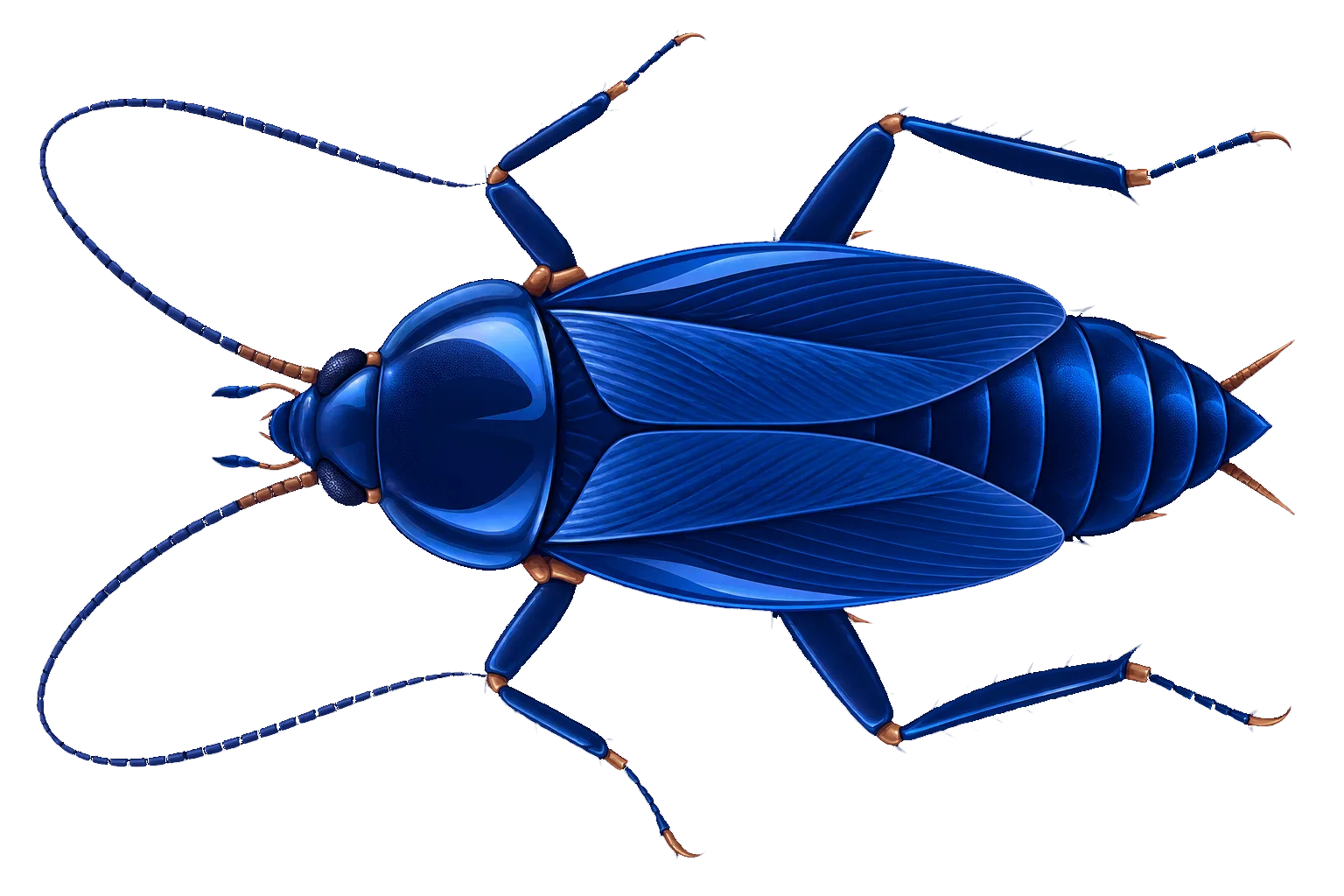
About the pest
Cockroaches are active at night and spend the day hidden in cracks by stoves, refrigerators, and sinks, and inside service ducts. If the insects are visible by day, the infestation is already heavy. In apartment buildings and food service, cockroaches migrate in from neighbors and with deliveries, so a one-off treatment with no barrier has a short-lived effect.
The danger cockroaches pose is sanitary: they carry the pathogens of intestinal infections on their legs, and their secretions are a potent household allergen. For food service and food production, signs of cockroaches are a direct risk during inspections.
The working plan is a combination of formats: gel is applied in spots by the harborages and works for weeks, bait stations and pucks protect zones where open products are undesirable, spray knocks numbers down fast, and sticky ribbons serve as monitoring. Cockroaches build resistance to active ingredients, so the range includes products on different chemical bases — rotate them between repeat treatments.
- Apply the gel in a dotted line along baseboards, cracks, and under appliances — where the insects travel.
- Do not wash the treated zones for several days: the gel needs time to work.
- Cut off the water: cockroaches cannot live without it — fix the dripping taps.
- Use products strictly according to the instructions on the pack.
Worth knowing
Seen by day means many
Cockroaches are nocturnal; daytime encounters mean a heavy infestation and competition for harborages.
Allergen and carrier
Cockroach secretions are a potent allergen; on their legs they spread the pathogens of intestinal infections.
They adapt to products
Resistance builds to a single active ingredient — rotate products with different bases.
How gel works
The insect eats the bait and carries it back to the harborage — the whole group dies, not one individual.
Product categories

Sticky ribbons and glue traps
Where chemicals are entirely off-limits — at a food plant, in a kitchen, or at a childcare facility — mechanical trapping does the work: glue and a food attractant. Not a gram of active ingredient, up to 4 weeks of effectiveness, and a result visible directly on the trap.
Learn more →
Gels
Gel is applied in a dotted line along the insect's route — with no need to treat the entire room, no odor, and no need to evacuate people. The insect carries the product into the nest, the colony dies within 2–3 days, and protection lasts for up to 8 weeks.
Learn more →
Bait stations
A bait station is bait that needs no laying out and cannot create a mess: the bait is enclosed in a plastic housing. Place it under the sink or behind the stove, and it works for up to 3 months without upkeep.
Learn more →

Cockroaches — pest control products · 18


DOXS® Cockroach Gel
SKU 2533298

DOXS® Cockroach Gel, New Formula
SKU 2534091

DOXS® Cockroach and Ant Gel
SKU 2533350

Tigard® Cockroach Gel
SKU 2533402

DOXS® Oboronhim Gel for Cockroaches
SKU 2533363

DOXS® Oboronhim Gel for Cockroaches, New Formula
SKU 2534117

Deadex® Cockroach Gel
SKU 2533428

Fumybat® Oboronhim Gel for Cockroaches
SKU 2533454

DOXS® Cockroach Bait Stations
SKU 2533324

DOXS® Cockroach Bait Stations, New Formula
SKU 2534130

DOXS® Boric Acid Cockroach Pucks
SKU 2533337

DOXS® Boric Acid Cockroach Pucks, New Formula
SKU 2534143

Deadex® Cockroach Bait Stations
SKU 2533415

Fumybat® Cockroach Bait Stations
SKU 2533441

Oboronhim Container Jumbo Cockroach Bait Station
SKU 2532739

DOXS® Covered Glue Trap for Cockroaches and Ants
SKU 2533467

DOXS® Universal Insect Spray
SKU 2533389

Insect Death No.1 EXTRA Universal Insect Spray, 250 ml
SKU 2534273Wholesale supply of pest control products
We supply distributors, retail chains, and agribusinesses direct from the plant: a complete document package for chains and uninterrupted shipments through the season.
Your own brand of pest control products
We make pest control products under our partners' brands — from formulation to finished packaging on our own lines. Discuss your product with our technologists.